Part 1: Lyme Disease: What Every Instructor Needs to Know
Why revisit Lyme disease and ticks?
Following several recent questions from instructors, I realized that there is still some confusion surrounding ticks and Lyme disease. I, too, realized that I had some doubts, so I wanted to revisit the topic in order to align our teaching with a common approach—one based on clinical practice, the most recent scientific data, and practical application in the field.
The most common misconception: skin lesions
"The redness around the bite is a normal reaction to the sting, similar to cellulitis or an allergic reaction."
False. Immediate redness around the bite site may indeed be harmless. However, erythema migrans—the sometimes target-shaped lesion associated with Lyme disease—appears between 3 and 30 days after the bite, measures ≥5 cm, and spreads gradually. This is not a local reaction: it is the hallmark of an active Borrelia burgdorferi infection spreading through the tissues.
How can you tell the difference between the two?
| Feature | Mild local skin bite reaction | Erythema migrans (Lyme disease) |
|---|---|---|
| Time to onset | Immediate to a few hours | 3 to 30 days after the bite |
| Size and location | Small, localized at the site of the bite | ≥ 5 cm, at the bite site |
| Evolution | Subsides within 24–72 hours | Grows day by day |
| Aspect | Uniform redness, sometimes accompanied by itching | Variable: uniform, bull's-eye, or irregular — not always bull's-eye |
| Local pain | Possible | Often absent or minimal |
| Systemic symptoms | Absent | Fever, fatigue, and possible muscle aches |
| Meaning | Mechanical or mild immune reaction |
Highly likely infection — antibiotic treatment indicated |
⚠ Critical teaching point
Erythema migrans is present in about 70 to 80 percent of Lyme disease cases, which means that it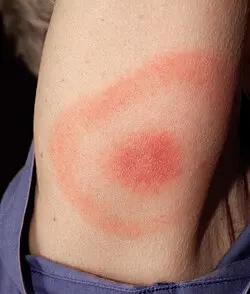
is absent in 20 to 30% of cases. Its absence does not rule out the disease. It is the overall clinical picture that matters.
“Redness that appears quickly and disappears = a local reaction.
Redness that appears later and spreads = consider Lyme disease”
Quick Review: Ticks, Infection, and the Decision Window
Let's review the fundamentals — this is where field management errors begin.
In Canada, the primary vector for Lyme disease is Ixodes scapularis (black-legged tick). Transmission of Borrelia burgdorferi generally requires prolonged attachment (often > 24–36 hours), although faster transmission is possible but rare. This is why daily skin checks remain the most effective preventive measure available.
The 72-Hour Rule
If the tick is removed within 24 hours and is not engorged, the risk of transmission is extremely low. A single-dose course of antibiotic prophylaxis (200 mg of doxycycline) is indicated only if the tick is an engorged I. scapularis removed between 24 and 72 hours after attachment in an endemic area. After 72 hours, prophylaxis is generally no longer recommended, and clinical monitoring is preferred. Monitoring continues for the following 30 days.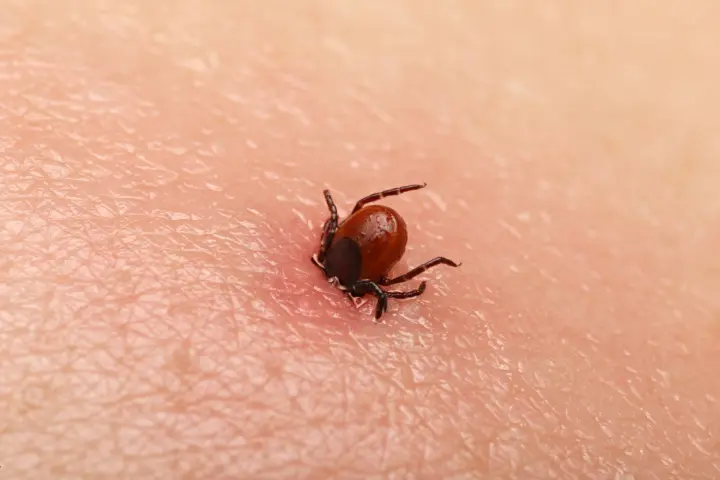
ID 55485218 | Lyme Disease © Natalya Aksenova | Dreamstime.com
🎓 Instructor's Note: What Your Participants Need to Know
- A engorged tick greatly increases the likelihood of transmission. A tick removed within 24 hours poses virtually no risk.
- Prophylaxis (preventive medication) is not routine; it is targeted. Avoid developing an automatic reliance on antibiotics.
- Doxycycline is contraindicated in pregnant women and children under 8 years of age. An alternative treatment plan should be arranged, or the patient should be referred promptly.
- Keep the tick in an airtight container and label it with the date: it can be tested if symptoms develop.
Putting risk into perspective
20–40% and 1–3%
Every instructor should know these two numbers — they are essential for calibrating the appropriate level of concern following a tick bite.
In endemic zones across Canada, between 20 and 40% of adult Ixodes scapularis are infected with Borrelia burgdorferi. That number is real, but it doesn't tell the whole story. The actual risk of developing Lyme disease after a bite — even in an endemic area, even with a potentially infected tick — is estimated at only 1 to 3%.
Why the gap? Several reasons: transmission requires prolonged attachment (36 to 48 hours), not every infected tick transmits the bacteria with every bite, and the immune system may clear an early infection before it becomes established.
This is not a reason to let our guard down — but it does put the actual level of risk in perspective. Daily inspection, prompt removal, and knowledge of the prophylaxis window remain the tools that make the real difference.
What Really Happens When an Infection Goes Untreated
This is where understanding becomes critical , and where folklore takes over. Untreated Lyme disease progresses through three distinct phases. The course is not linear for everyone, and atypical presentations are common.
Day 3–30, Stage 1 — Early-stage, localized
Erythema migrans (if present), fatigue, mild fever, headache, muscle aches. The bacteria are still mainly confined to the skin. This is the golden window: antibiotic treatment at this stage leads to almost certain recovery.
Weeks 2–8 Phase 2 — Early disseminated
Borrelia has spread to the nervous system, the heart, and the joints. Symptoms may include: facial paralysis (Bell's palsy), lymphocytic meningitis, atrioventricular block, and multiple erythema migrans. This condition can be potentially serious if left untreated. Intravenous antibiotics are sometimes necessary at this stage.
Month + Phase 3 — Late-stage disseminated
Lyme arthritis (most commonly affecting the knee), encephalopathy, peripheral neuropathy. These complications are rare when the disease is diagnosed and treated appropriately. They occur in patients who have gone undiagnosed or have been inadequately treated over a long period of time.
✓ What changes with treatment
Lyme disease diagnosed and treated in stage 1 or 2 is curable in the vast majority of cases. A 10- to 21-day course of doxycycline or amoxicillin (depending on the stage) is generally sufficient. Long-term complications are primarily associated with undiagnosed disease.
Relapses, Recurrences, and Persistent Symptoms: Debunking the Myths
This is fertile ground for folklore. Many patients treated for Lyme disease continue to report symptoms for weeks or months after finishing their course of antibiotics. This phenomenon is real, but it is often misinterpreted.
Does a "relapse" of Lyme disease exist?
"I was treated for Lyme disease two years ago, and my symptoms have returned. I've had a relapse."
Reinfection is possible if a new infected tick bites the same person. This is a new infection, not a recurrence of the previous one. True recurrence (bacterial persistence following appropriate treatment) is extremely rare with current antibiotic regimens in immunocompetent patients.
Post-Treatment Lyme Disease Syndrome (PTLS)
Some patients who have received appropriate treatment continue to experience fatigue, muscle pain, cognitive difficulties, or joint pain for several weeks to several months. This condition is recognized and is called post-treatment Lyme disease syndrome (PTDS), formerly known as “chronic Lyme” in common parlance.
📋 What Science Says About PTLS
Post-Treatments Lyme Syndrome (PTLS) affects approximately 10 to 20% of patients following appropriate treatment for Lyme disease. The most common symptoms include persistent fatigue, widespread pain, and difficulty concentrating (“brain fog”).
To date, studies have not demonstrated any benefit from extending antibiotic therapy beyond the standard treatment for PTBS. Extending antibiotic therapy exposes patients to significant side effects without improving clinical outcomes.
The management of SPTL relies on symptomatic treatment, gradual rehabilitation, and medical follow-up, not on repeated courses of antibiotics.
"Chronic Lyme disease": a controversial concept
The term "chronic Lyme" is widely used in patient communities and on social media to describe a pattern of persistent symptoms attributed to an active Borrelia infection. This diagnosis is not recognized by medical organizations in Canada (PHAC, CPS), the United States (IDSA, CDC), or Europe, as microbiological data do not support bacterial persistence following standard treatment.
This does not mean that patients are actually experiencing less pain. Their symptoms are real. But attributing them to an active, unresolved bacterial infection means prescribing treatments (long-term antibiotics, sometimes intravenous) whose effectiveness has not been proven and whose risks are well documented.
“The patient’s suffering is real. The diagnosis of ‘chronic Lyme disease’ as an active bacterial condition, however, is not.”
Debunking Folklore — The Most Persistent Myths
"The bull's-eye rash is required for a diagnosis of Lyme disease."
The classic target-shaped rash is present in fewer than half of confirmed cases. The rash may be uniform, irregular, or absent. The clinical diagnosis is based on the overall clinical picture.
"If the blood test is negative, I don't have Lyme disease."
In the early stage (less than 4 weeks), serological tests (ELISA, Western blot) are often negative. The immune system has not yet produced enough detectable antibodies. A negative test result in the early stage does not rule out infection. Early diagnosis is clinical.
"All ticks transmit Lyme disease."
No. In Canada, only Ixodes scapularis (black-legged tick) and Ixodes pacificus (West Coast tick) transmit Lyme disease. The American dog tick (Dermacentor variabilis), which is often mistaken for these species, does not transmit Borrelia.
"Antibiotics don't work against Lyme disease."
False. Doxycycline and amoxicillin are highly effective in the early stages. Treatment failure almost always occurs in cases where the diagnosis was made late or where existing neurological or joint complications do not resolve completely—not because the bacteria are resistant to antibiotics.
"You can have Lyme disease without ever having seen a tick or a rash."
This is technically true, as the I. scapularis nymph measures 1 to 1.5 mm and often goes unnoticed. However, in the absence of exposure in an endemic area, the differential diagnosis must be broad. Lyme disease is often overdiagnosed in non-endemic areas, to the detriment of genuine underlying conditions.
The Canadian Perspective: A Reality That Extends Beyond the Eastern Townships
It would be easy—and convenient—to limit the discussion of Lyme disease to Quebec. The Montérégie, the Estrie, the Laurentians, and the Outaouais are indeed among the most affected regions in the country. But the problem is nationwide.
The Public Health Agency of Canada (PHAC) has recognized Lyme disease as a notifiable disease since 2009. Cases have increased in all provinces with high deer populations. Ontario (Kingston, Long Point, Rouge Valley) and Nova Scotia (Atlantic coast) are among the high-risk areas, and emerging outbreaks have been documented in New Brunswick and Manitoba.
🟗 Geographic Distribution in Canada — Updated
| Province / Region | Status | Areas to watch |
|---|---|---|
| Quebec | Established endemic | Montérégie, Estrie, Outaouais, Laurentides, Lanaudière |
| Ontario | Established endemic | Long Point, Kingston, Rouge Valley, Thousand Islands |
| Nova Scotia | Established endemic | Atlantic Coast, Annapolis Valley |
| New Brunswick | Emerging | Southern part of the province |
| Manitoba | Emerging | Winnipeg area, Riding Mountain Park |
| British Columbia | Localized outbreaks | Vancouver Island (I. pacificus) |
For an instructor who works in multiple provinces—as is often the case with SIRIUSMEDx teams—the assumption that “Lyme disease is limited to Quebec” can be costly. Flu-like symptoms in July following a week of work in the Ontario forest warrant exactly the same level of vigilance.
The European Perspective: Lyme Disease Outside North America
Lyme disease is not limited to North America. In Europe—and particularly in Scandinavia—Lyme borreliosis is widespread, with clinical characteristics that every instructor involved in international deployments must be familiar with.
In Scandinavia (Norway, Sweden, Finland) and across much of Western and Central Europe, the primary vector is Ixodes ricinus (the castor bean tick), and the causative agents are primarily Borrelia afzelii and B. garinii—genospecies belonging to the same complex as the North American B. burgdorferi sensu stricto, but with distinct clinical manifestations.
🌿 Clinical features of European borreliosis
Chronic atrophic acrodermatitis (CAA) — a late-onset cutaneous manifestation that is virtually absent in North America but well documented in Europe, associated with B. afzelii. The skin of the lower limbs gradually becomes atrophic, erythematous, and indurated over a period of months to years. It is often mistaken for other skin conditions.
Neuroborreliosis — a neurological condition reported more frequently in Europe than in the Americas. Bannwarth’s radiculitis is virtually pathognomonic of European borreliosis: intense, asymmetrical, nocturnal radicular pain associated with lymphocytic meningitis. The clinical presentation can be severe but is treatable.
Erythema migrans — clinically similar to the North American form, but even more often uniform (without the classic target-like appearance) in cases caused by B. afzelii. The lesion may persist longer before disappearing.
Geographical distribution in Europe
| Region | Lyme Disease Status | Priority monitoring areas |
|---|---|---|
| Norway / Sweden / Finland | Established endemic | Norwegian coastal areas, Swedish forests, Finnish archipelagos — documented northward expansion |
| Germany / Austria / Switzerland | Endemic — high incidence | Bavaria, the Black Forest, and the Rhineland—among the hardest-hit regions in Europe |
| France / Benelux | Established endemic | Alsace, Lorraine, the Ardennes, and humid forest areas |
| Baltic States / Eastern Europe | Endemic — very high incidence | Estonia, Latvia, Lithuania, Poland, the Czech Republic |
| United Kingdom | Emerging endemic | Scotland, English forests — on the rise |
⚠ Climate Change and Arctic Expansion
Global warming is pushing the range of I. ricinus further north every year. Ticks have been documented well beyond the Arctic Circle in Norway. For SIRIUSMEDx teams working in northern or subarctic regions, Lyme disease is no longer a concern limited to temperate zones.
Data Processing in the European Context — Some Nuances
The first-line treatment for European borreliosis also relies on doxycycline or amoxicillin, in accordance with the guidelines of the ESCMID (European Society of Clinical Microbiology and Infectious Diseases). The recommended durations are similar to North American standards for early-stage disease. However, neuroborreliosis (Bannwarth’s radiculitis, meningitis) is more commonly treated with IV ceftriaxone in Europe—a distinction that matters if your team is operating in a remote location on the European continent and needs to coordinate a medical evacuation.
🎓 Instructor key knowledge — Deployment in Europe
- Lyme disease is found throughout temperate forested Europe—the Canadian reflex of "tick = think Lyme" applies perfectly here.
- The absence of a "target-like" appearance in the erythema is even more common with European strains—do not wait for this sign to take action.
- In cases of severe, nighttime radicular pain in a participant who has returned from a forested area in Europe, consider neuroborreliosis, even in the absence of skin lesions.
- In Central Europe and the Baltic states, ticks also transmit tick-borne encephalitis (TBE) — an additional risk discussed in Part 2 of this article.
- A vaccine against TBE is available and recommended—it should be included in every travel health plan before traveling to Central or Northern Europe.
What We Teach—and What We Should Teach
🎓 Key messages for field training
- Daily checks are the best form of prevention. They’re simple, free, and effective. Pay special attention to hard-to-see areas: the scalp, behind the ears, the groin, the back of the knees, and the belly button.
- Immediate redness is not erythema migrans. Explain the difference clearly, because that is where the confusion begins.
- The target lesion is a partial myth. It is a classic finding but not a mandatory one. Do not teach that it is pathognomonic.
- The 72-hour window does exist. Post-exposure prophylaxis has a specific purpose and specific conditions. Do not generalize.
- 30-day monitoring period. Any participant in an endemic area who develops flu-like symptoms within 30 days of leaving the area should discuss the possibility of Lyme disease with their doctor.
- Early treatment of Lyme disease = recovery. Don’t let fear hold you back. Lyme disease isn’t a death sentence—it’s a treatable bacterial infection.
Part 2: For the discerning reader who wants to delve deeper
The following sections are intended for instructors, healthcare professionals, and first responders who wish to expand their knowledge beyond Lyme disease. Advanced content: other tick-borne diseases in North America, as well as European and global perspectives.
Beyond Lyme: Other Tick-Borne Infections in North America
Lyme disease attracts so much media and educational attention that we sometimes forget that Ixodes scapularis can transmit other infectious agents at the same time, and that other North American tick species carry their own pathogens. For an instructor or healthcare professional working in a remote setting, this lack of awareness can lead to serious diagnostic errors.
| Disease | Primary agent / vector | Key clinical presentation | Treatment |
|---|---|---|---|
| Anaplasmosis | Anaplasma phagocytophilum / Ixodes scapularis | Sudden onset of fever, headache, muscle pain, leukopenia, thrombocytopenia, elevated transaminases — severe flu-like symptoms | Doxycycline — a prompt response is expected |
| Babesiosis | Babesia microti / Ixodes scapularis | Hemolytic fever, sweating, chills, anemia—resembles malaria. Severe in immunocompromised patients and those without a spleen | Atovaquone + azithromycin (or clindamycin + quinine) |
| Rocky Mountain spotted fever (RMSF) | Rickettsia rickettsii / Dermacentor variabilis (dog tick) | High fever, severe headache, centrifugal petechial rash (wrists, ankles → trunk) — medical emergency | Doxycycline immediately — high mortality if treatment is delayed |
| Ehrlichiosis | Ehrlichia chaffeensis / Amblyomma americanum (tique solitaire) | Fever, headache, muscle pain, leukopenia. Rare rash. Symptoms range from moderate to severe depending on the host | Doxycycline |
| Tick-borne paralysis | Salivary neurotoxin / Dermacentor spp., I. scapularis | Ascending ataxia, progressive weakness in the limbs, which may mimic Guillain-Barré syndrome — complete resolution following removal of the tick | Tick removal = single treatment |
| Powassan disease | Virus Powassan / I. scapularis, I. cookei | A rare but serious viral encephalitis: fever, confusion, seizures — transmission can occur in less than 15 minutes. No specific treatment | Supportive care — no antiviral medications available |
| Red Meat Allergy Syndrome (AGS) | Alpha-gal / Primarily Amblyomma americanum | Delayed allergic reaction (3–6 hours) to red meat and mammalian products following sensitization via a bite. Hives; anaphylaxis possible | Food elimination, epinephrine if anaphylaxis occurs — may be permanent |
⚠ Co-infections — A common pitfall
Ixodes scapularis can transmit B. burgdorferi, A. phagocytophilum, and B. microti simultaneously in a single bite. A patient being treated for Lyme disease who does not respond to doxycycline within 48–72 hours should raise suspicion of coinfection—particularly babesiosis, which does not respond to standard antibiotics.
"The dog tick (Dermacentor variabilis) doesn't transmit anything dangerous—it's not the 'Lyme disease tick.'"
It doesn't transmit Lyme disease, that's true. But it is the primary vector for Rocky Mountain spotted fever in North America—one of the deadliest rickettsial diseases if not treated promptly. A large, visible tick isn't necessarily harmless.
🎓 Instructor Notes — Non-Lyme Infections in North America
- Fever + tick bite ≠ automatically Lyme disease. Clinical presentation and geographic location guide the diagnosis.
- Tick-borne paralysis is reversible once the tick is removed—but the condition is often missed because the tick is small and well-hidden. If you experience unexplained progressive weakness, check for an attached tick.
- Powassan disease is rare, but transmission occurs almost immediately—a further reminder that prevention (daily checks, repellents) is more important than relying solely on prompt removal.
- Red meat allergy (RMA) is underdiagnosed and on the rise in Canada. A participant who develops hives or anaphylaxis several hours after a meal in the forest should be asked about any history of tick bites.
- Doxycycline is effective against anaplasmosis, ehrlichiosis, and FMR—further evidence of its importance in the medical kit in remote areas of North America.
Global Perspective: Tick-borne Diseases Other Than Lyme Disease
Today, SIRIUSMEDx teams operate far beyond Canada’s borders. Malaysia, South America, Scandinavia, and Central Europe are just a few of the regions where the issue of ticks extends far beyond Lyme disease. European borreliosis was covered in Part 1. The following section addresses other tick-borne pathogens by region.
Central and Eastern Europe — Tick-borne encephalitis (TBE)
This is where the reflex to equate "ticks" with "Lyme disease" becomes potentially dangerous. In Central Europe (Austria, Germany, the Czech Republic, Hungary, the Baltic states, and Russia) and in certain parts of Scandinavia, ticks can also transmit the tick-borne encephalitis virus (TBE).
⚠ Tick-borne encephalitis — What instructors need to know
TBE is a viral infection; antibiotics are ineffective. There is no post-exposure prophylaxis. Treatment is solely symptomatic and supportive.
Transmission can occur in less than 24 hours—unlike with Lyme disease, there is no protective incubation period in the same way.
There is an effective vaccine against TBE (Ticovac®, Encepur®), which is recommended for anyone working in forested areas in Central Europe and the Baltic states. This should be systematically included in your teams’ travel health plans.
Malaysia and Southeast Asia — A very different picture
In Malaysia and the Asia-Pacific region, Lyme disease as we know it is exceptionally rare or nonexistent. The Ixodes ticks capable of transmitting Borrelia burgdorferi are not present in these tropical ecosystems. It would therefore be a significant diagnostic error to attribute a clinical presentation to “Lyme disease” in Malaysia.
In contrast, ticks found in Southeast Asia transmit other potentially serious diseases:
| Disease | Agent / Vector | Clinical presentation | Treatment |
|---|---|---|---|
| Rocky Mountain spotted fever (and similar diseases) | Rickettsia spp. / various ticks | Fever, headache, petechial rash, possible multi-organ failure | Doxycycline — medical emergency |
| Scrub typhus | Orientia tsutsugamushi / mites (chiggers) | Fever, injection site reaction, rash, swollen lymph nodes | Doxycycline, azithromycin |
| Anaplasmosis / Ehrlichiosis | Anaplasma, Ehrlichia / Ixodes | Fever, leukopenia, thrombocytopenia, elevated liver enzymes | Doxycycline |
| Crimean-Congo hemorrhagic fever (CCHF) | Nairovirus / Hyalomma spp. | Severe hemorrhagic syndrome — high mortality | Ribavirin, intensive care |
🎓 Instructor Key teaching points — Malaysia and Southeast Asia
- Do not immediately suspect Lyme disease in a tropical setting. Instead, consider rickettsial diseases, scrub typhus, or dengue fever first when faced with a febrile syndrome following exposure to a forest environment.
- The inoculation lesion (a black spot at the bite site) is characteristic of rickettsial diseases—it should always be looked for.
- Doxycycline covers the majority of tick-borne bacterial diseases in this region—a significant logistical advantage in remote areas.
- Scrub typhus is transmitted by chigger larvae, not ticks per se—but confusion is common in the field.
South America — One continent, many realities
The situation in South America is varied and often poorly understood. Classic Lyme disease (B. burgdorferi sensu stricto) is absent from most of the continent. Atypical borrelioses have been reported in Brazil—the scientific debate over their exact nature is still ongoing.
Tick-borne diseases that have been reliably documented in South America include:
🗺 Tick-borne diseases in South America — Operational context
Brazilian spotted fever (BSF) — caused by Rickettsia rickettsii, transmitted primarily by Amblyomma cajennense. One of the deadliest rickettsial diseases in the world if left untreated. Found in Brazil, Colombia, and Argentina. Clinical presentation: sudden onset of fever, severe headache, centrifugal petechial rash. Medical emergency—doxycycline immediately.
Ehrlichiosis / Anaplasmosis — reported in Central and South America, with moderate to severe clinical presentation.
Babesiosis — a tick-borne parasitic disease that is rare but has been documented. Clinically similar to malaria (hemolytic fever). Should be considered in endemic areas in febrile patients following exposure.
“I worked in the Amazon rainforest and I have a red rash around a tick bite—it’s probably Lyme disease.”
Unlikely. In an Amazonian setting, the first considerations should be rickettsiosis, a local reaction, or a secondary skin infection. Brazilian spotted fever is far more likely than Lyme disease in this geographical context—and it requires much more urgent treatment.
Global Overview — Quick Reference Guide
| Region | Lyme (see Part 1) | Priority tick-borne diseases | Clinical note |
|---|---|---|---|
| Canada / Northeastern United States | ✓ Endemic — See Part 1 | Anaplasmosis, Babesiosis (Part 2) | IDSA/PHAC Protocol |
| Western Europe / Scandinavia | ✓ Endemic — See Part 1 | TBE (viral, vaccine available) | TBE vaccine recommended in high-risk areas |
| Central Europe / Baltic States | ✓ Endemic — See Part 1 | High risk of TBE — essential vaccine | TBE = viral infection, no antibiotics |
| Southeast Asia / Malaysia | Not significant | Rickettsial diseases, scrub typhus, FHCC | Inoculation scar = key sign |
| Brazil / South America | Absent / atypical | Brazilian spotted fever, ehrlichiosis | FTB = life-threatening if left untreated |
| Sub-Saharan Africa | Absent | African tick-borne fever (R. africae), FHCC | African tick-borne fever, which is often mild |
| Middle East / Central Asia | Rare / localized | FHCC (Hyalomma), rickettsiosis | FHCC = hospital-acquired risk |
"Outside North America and Europe, 'tick-borne fever' does not necessarily mean Lyme disease. Diagnostic approaches must be tailored to the region."
🎓 Key Message for Instructors Deployed Abroad
- Each assignment requires a specific travel health plan. Tick-borne diseases vary significantly from one continent to another.
- Doxycycline is a broad-spectrum antibiotic effective against most tick-borne bacterial diseases worldwide. This is a major logistical advantage—but it does not cover TBE (viral) or babesiosis (parasitic).
- In Scandinavia: Check your TBE vaccination status before every trip to forested areas. An effective vaccine is available—make sure to get it every time.
- In Southeast Asia and South America: if a patient presents with fever and a tick or mite bite, consider rickettsiosis as the primary diagnosis. The inoculation lesion is the key to clinical diagnosis.
- Brazilian spotted fever is a medical emergency. Do not wait for laboratory results to begin treatment if the clinical presentation is suggestive of the disease in an endemic area.
Conclusion: Teach with precision, but be reassuring
Lyme disease suffers from two extremes: on the one hand, downplaying the condition (“it’s just a tick bite; it’ll go away”), and on the other, sensationalizing it through stories of uncontrollable and incurable “chronic Lyme.” The clinical reality lies elsewhere: it is a serious, well-defined bacterial infection that can be effectively treated when caught early.
Our role as instructors and healthcare professionals in remote areas isn’t to know everything, but to avoid compounding mistakes. We teach the right timeframes, the right signs, and the right decisions, and gently correct misconceptions when we hear them being discussed around a campfire.
A tick isn't scary to those who understand it.
📚 References and Resources
- Public Health Agency of Canada (PHAC)
- INSPQ · Canadian Paediatric Society (CPS)
- IDSA — Recommandations sur la maladie de Lyme 2020 · CDC
- European Society of Clinical Microbiology and Infectious Diseases (ESCMID) — Guidelines for Lyme Borreliosis 2023
- European Centre for Disease Prevention and Control (ECDC) — Tick-borne diseases
- WHO — Tick-borne diseases worldwide
- The Norwegian Institute of Public Health · The Public Health Agency of Sweden
- THL (Finland)
- Ministério da Saúde do Brasil — Febre maculosa
- SIRIUSMEDx Field Manual
- Johnson et al., NEJM, 2001 (SPTL )
- Steere AC, Lancet, 2003
- Stanek G et al., Lancet, 2012 (Lyme borreliosis in Europe)
Dr. Marc Gosselin, M.D. President and Medical Director of SIRIUSMEDx. The opinions expressed in this blog are clinical and educational in nature; they are not intended to replace individual medical advice.
Commencez à écrire ici ...